


What Can Be Done About Blisters?
Posted by Jeremy Windsor on Nov 24, 2023

Earlier this year Roger Kockelbergh was one of four students to be awarded a MSc in Mountain Medicine by the University of Central Lancashire (UCLan). I caught up with Roger to ask him about his background and the process of completing this much sought after qualification.
Congratulations Roger on being awarded your MSc in Mountain Medicine! Before we talk about it, can I ask you to tell us a bit about your medical background?
I retired as a consultant urologist in February 2023 having spent my career doing a lot of open and laparoscopic surgery (latterly robotic) for mainly kidney and bladder cancer. I was lucky to collaborate with some excellent researchers and had made a significant contribution to urological cancer clinical trials ( which was the main reason I got an honorary chair, I think). I did a fair amount of national cancer work (Chair of the British Association of Urological Surgeon’s section of oncology, National Lead in Urology for the Cancer Collaborative, chair of the Clinical Reference Group for the National Prostate Cancer Audit etc). I still do the audit chair and I am chair of trustees for Action Bladder Cancer UK, one of two bladder charities.
What about the mountains?
I had always spent time in the mountains, predominantly Wales and Cumbria and I had always slightly regretted not doing more difficult climbing - my career just got in the way!
I have skied for 40 years and found off piste really enjoyable. I have done 3 trips to Norway, mostly hut to hut touring with some snow holing. Retirement in February gave me some space and so my wife and I spent a month based in Bourg St Maurice skiing with family and friends.
I do quite a lot of cycling, more seriously since 2009, when we rode across France for charity. I’m currently time trial secretary for my local club and have ridden off road for a couple of decades and collected a few injuries in doing so.
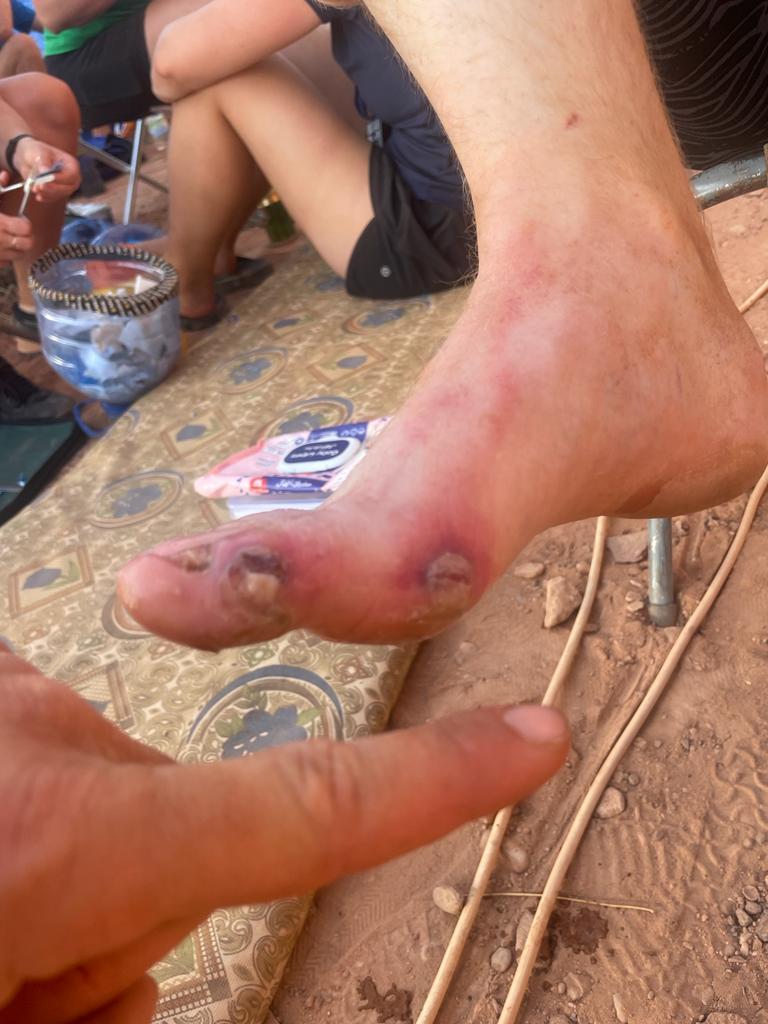
Despite how often they're encountered in the mountain environment there's a lot we don't know about blisters. How do they influence physical performance? What will happen if you ignore them and press on? Are their long term consequences for your feet if you do?
And the Diploma in Mountain Medicine (DiMM)?
I first started to think about mountain medicine in my 50s, when I returned to rock climbing and started to look again at some big mountains. A couple of colleagues had done the DiMM and it sounded like fun. I saw it as a potential vehicle to join some interesting mountain adventures and a bit of a retirement plan. I found myself completely out of my comfort zone when doing the DiMM both medically and in terms of mountain skills. It was enormous fun and I learnt a huge amount. It gave me confidence to move on to two things that I wouldn’t have considered possible. Firstly I volunteered to be a doctor at the commonwealth games. Because of the DiMM I was encouraged to be a team leader who looked after on court athletes. This was a really positive experience and I found myself court side at much of the netball. Secondly, I started working a little for Trailmed who provide medical services to several event companies. I started doing some ultramarathon cover and was soon the lead doctor for events. This opened a door to overseas events and I climbed Kilimanjaro as the doctor for a group in the summer of 2023…
What led you to decide on a MSc in mountain medicine?
When the DiMM moved from Edinburgh to UCLan it felt like there was unfinished business. The move coincided with me working part time, so I felt that it was a perfect time to get on with it and perhaps enhance my outdoor medicine CV!
Can you tell us about your area of research?
The project was a data linkage study researching foot blisters in ultramarathons.
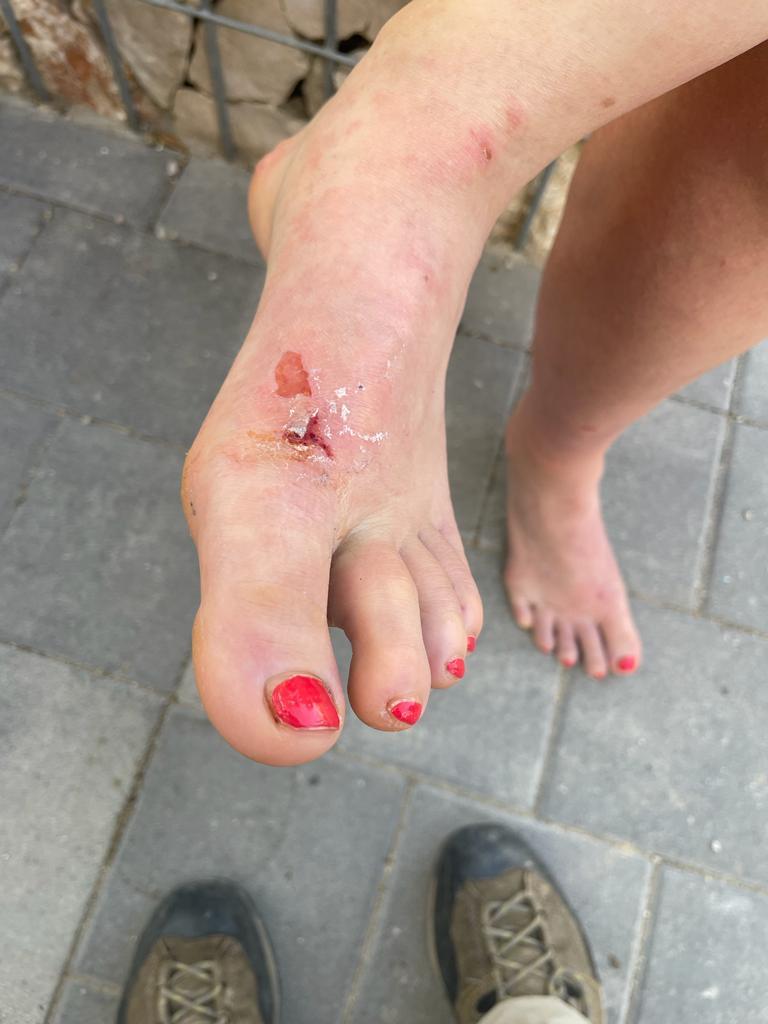
Prevention is better than cure. So what factors increase the chances of developing blisters? How can such knowledge be used to prevent them?
How did you collect your data? What were you collecting?
I managed to get hold of two prospectively collected data sets, one contained timing data from over 13,000 participants in 12 different events. The second dataset was medical tent records from the same events and included over 7,800 consultations. Unfortunately the medical data was mainly free text, so had to be sorted manually.
What were your findings?
I can say that foot blisters had an impact on athletic performance but you will need to read the paper to see the detail.
What were the most challenging parts of your dissertation? How did you overcome them?
Lots of challenges, essay writing is not a great strength so I found that hard.
Then waiting for things to happen was a real frustration, getting the data, getting permission to use the data and getting ethical approval all took ages. It was 10 months into the course before I was in a position to do the analysis, so a couple of months suspension was very helpful so I could do the preparatory work prior to regaining access to the university software.
Translating the free text into categorical data just took time and patience.
External supervision was difficult and in the end just didn’t happen, it would have been a more refined end product if that had worked.
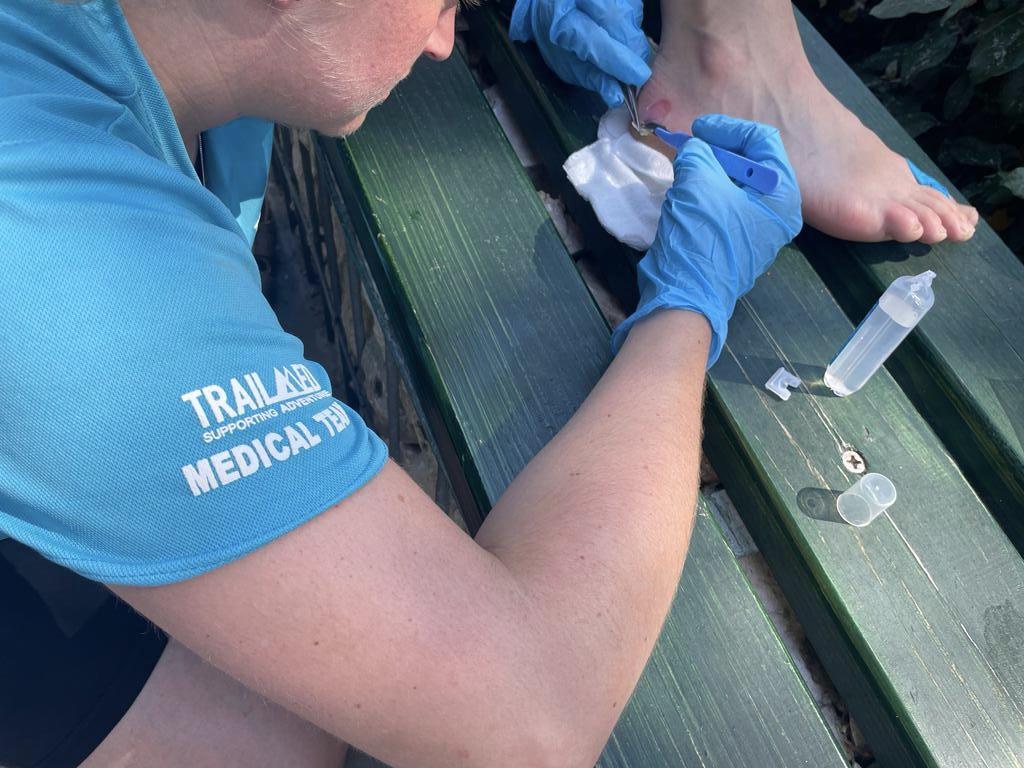
What's the best way to treat blisters once they appear? Is it simply the case of covering them up? Should you "pop" them? Remove lose skin? What factors should influence your decision?
Do you have plans to share your results more widely?
Yes, I am writing a paper for publication on a refined group of the data.
What advice would you give to those who are thinking about a MSc in mountain medicine?
Its a big time commitment, but the purpose of it is to develop research skills.
Ideally, have a good research idea before starting so as to allow you to do some of the groundwork beforehand.
Thanks Roger!
Read about Chris Lewis and his MSc in mountain medicine here.
For more information about the University of Central Lancashire's Diploma in Mountain Medicine (DiMM) take a look at this.
Thanks for reading this post. If this is what you're interested in why not take a look at other posts on the blog? Better still, how about joining the British Mountain Medicine Society? More information can be found here.

Comments
Leave a comment.
Leave a comment.

 )
) Bronze
 Silver
 Gold
Gold Platinum
 Palladium
 Internal