


Making It Happen...
Posted by Jeremy Windsor on Mar 21, 2025

The Professor Jim Milledge Mountain Medicine Bursary is an annual award overseen by the British Mountain Medicine Society ("Lucky Jim Award"). Recent winners have included James Bridger, Helen Blamey and Chris Lewis. Last year Dr Ankit Patel was one of two winners of the award. I caught up with Ankit to find about his work and what winning the Lucky Jim Award means to him...
Thanks Ankit for talking to me! Before we start - many congratulations on completing your MSc Mountain Medicine and being a winner of the 2024 Lucky Jim Award! Can you tell us a bit about yourself?
My name is Ankit. I am an ENT trainee and am currently on a post-CCT fellowship in Brisbane. My passions in life are mountains, cricket and DIY!
What led you to decide on a MSc in mountain medicine?
I had always been fascinated about the mountain medicine programme since hearing about it as a medical student. I wanted to be involved with expedition medicine and increase my knowledge of pre-hospital care in extreme environments. It seemed like the perfect way to do some mountaineering with some medicine too.
The MSc in Mountain Medicine is open to all holders of the DiMM and involves completing a dissertation. Many students opt to undertake research. Can you tell us about the area you looked into?
I focussed my project around my interest in otology and investigated the inner ear at altitude. Specifically, I wanted to assess the changes in inner ear physiology that an individual encounters as they ascend to altitude.
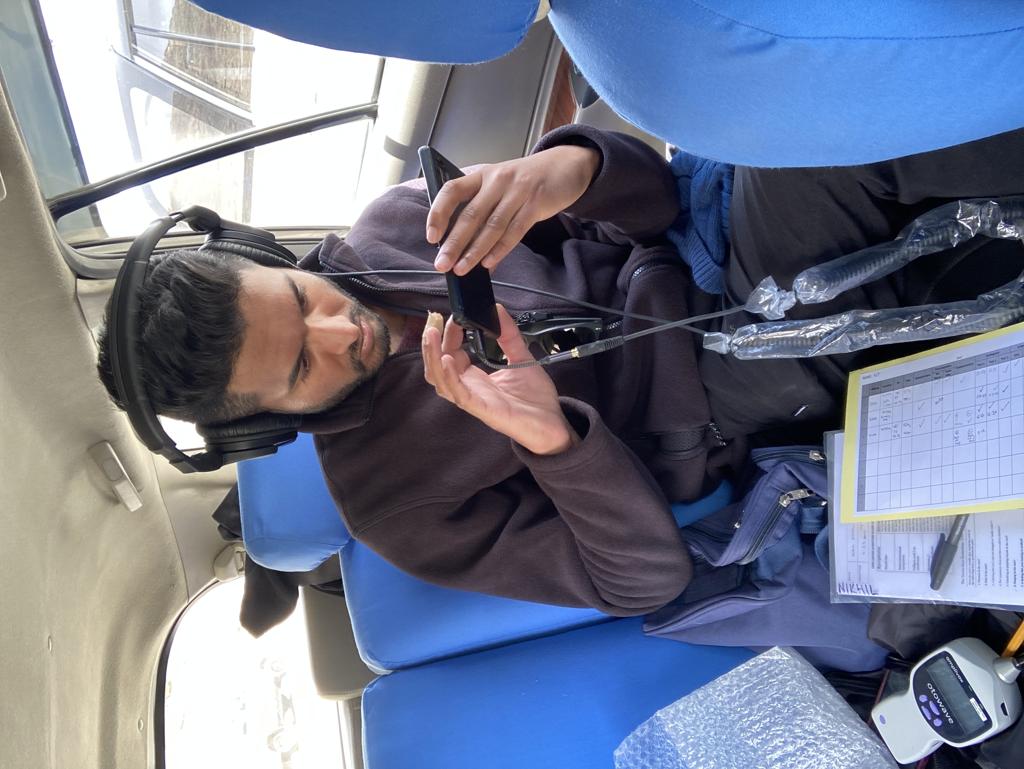
Pure Tone Audiometry at High Altitude
How did you collect your data? What were you collecting?
I wanted to collect as much data as possible, but I had to work out alternative ways of testing in an extreme environment with limited power and resources. I collected the following data using the methods below:
Pure-tone audiometry - a subjective test of hearing
Tympanometry - an objective test of middle ear pressure
Otoacoustic emissions - an objective test of hearing
Electrocochleography - an objective test of balance and hearing
Posturography - an objective test of balance
In addition, I also measured blood pressure, oxygen saturations and Lake Louise AMS scores!
What were your findings?
There was a statistically significant difference in the audiometric threshold (AT) between 0m and 3524m (paired T-test, p = 0.0001), and 0m and 5350m (paired T-test, p < 0.0001) indicating that hearing worsened as the altitude increased. A strong positive correlation was also identified between posturography scores and altitude (Spearman’s Rank Correlation = 0.97, p = 0.0048). These findings were reversible on descent and normalised on return to sea-level.
There was no change in tympanometry.
Electrocochleography was only sporadically performed due to electrical interference encountered in the remote areas, but showed no change at 3524m from the limited data available.
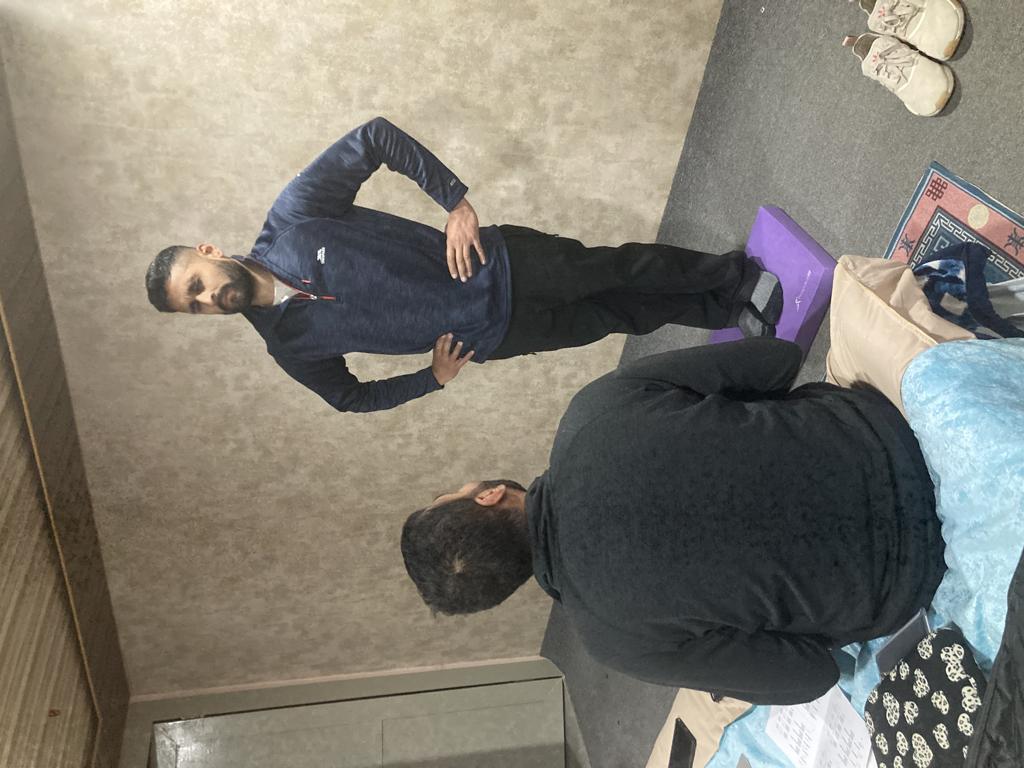
Testing of standing balance
What were the most challenging parts of your dissertation? How did you overcome them?
1 - I completed ethical approval via the University of Central Lancashire where the masters was based. They had a strict process which eventually went to an ethical committee. After several rounds and amendments it was a very satisfying feeling to finally receive the approval.
2 - Making it happen! The actual process of making it reality was a stormy process. We aimed to recruit 8 healthy volunteers that were already travelling to an area of altitude. I would join this tour and recruit them into the study. An ethical requirement was for them to be UK residents. After toying with the idea of going back to the Everest region, or Kilimanjaro or South America, I eventually decided to go to Ladakh in Northern India – the location of the world’s highest road pass – the Khardung La at 5350m. This is a common place for tourists and the road access means carrying equipment was simpler.
Sourcing and training on every piece of equipment was challenging, but by far the most challenging was the machine to undertake electrocochleography. Normally, electrocochleography is performed in a controlled quiet environment so whether it was even possible at altitude was a doubt. Developing close relationships with my local audiology department was paramount. Understandably, my request to borrow their newest electrocochleography machine was declined (the interacoustics eclipse costs in the region of £25K!). However, they managed to source me a decommissioned but working module. It just required repairing and calibrating – luckily funding helped towards this.
One of the major challenges I anticipated was power in the mountains. I aimed to perform the testing in sequence from sea-level to Leh (3500m) to Pangong Lake (4220m) and the Khardung La Pass (5350m). At Pangong Lake and the pass there is little or no power available. Some of our equipment used mains power and there are limits to the amount of lithium batteries that can be taking as baggage on airlines. Needless to say some of my lithium batteries were confiscated despite being below the allowed amount. In the end the only way I could produce 230V AC power to the Eclipse machine was to purchase 12V car batteries in Leh (easily available) and take a 12V to 230V inverter on the trip.
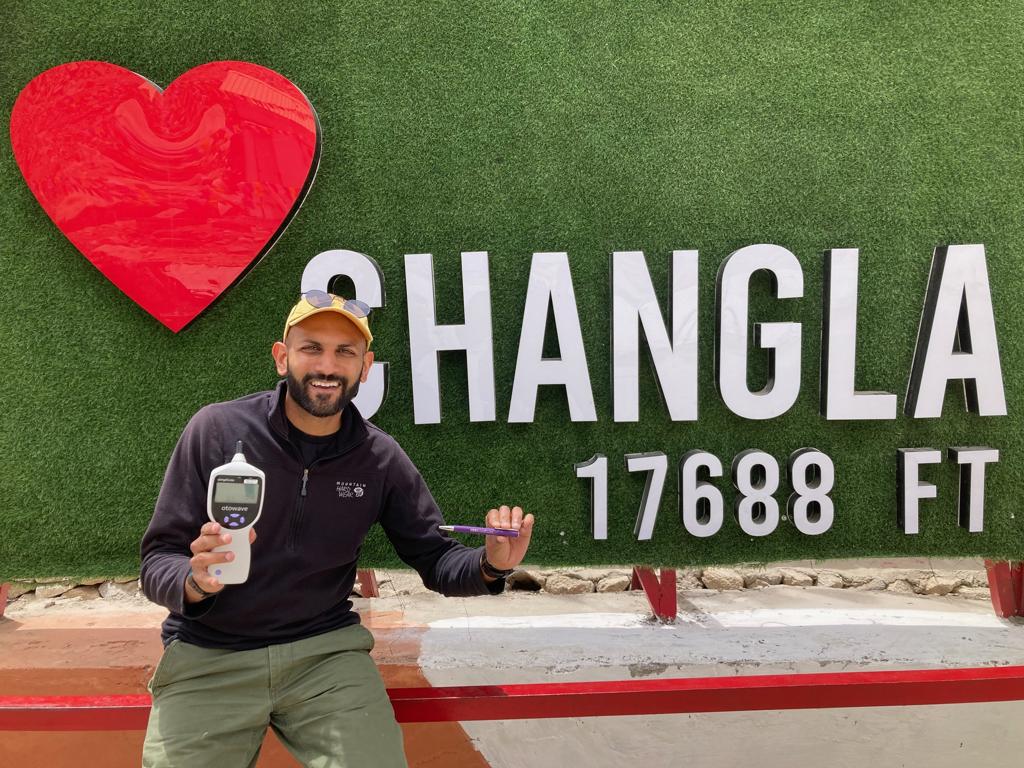
Ankit stopping for a photo on the Khardung La (5350m)
I had some early wins. I managed to recruit 7 volunteers into my study. 1 short of the aim but I was willing to accept that. I managed to complete all the testing at sea-level (including ear dewaxing) and Leh at 3500m. It did take me 5 hours even though I tried to find a system to test 7 individuals at efficiently as possible.
When I got to Pangong Lake the power issues were real. They had limited power available via a petrol generator for 1 hour of the day. But, I didn’t fear, as I had my car batteries and inverter ready! As planned, I was able to produce 230V AC power from my inverter and the Eclipse turned on without a problem. Unfortunately the inverter produced a level of electrical interference that despite hours of my best attempts I was unable to mitigate. The electrocochleography waveforms test the inner ear and require a very stable environment. For a reason beyond my understanding the inverter produced a frequency of energy which failed to allow the machine to detect the desired waveforms, although thankfully it was still able to produce OAE’s. This was a huge disappointment. However, I knew time was precious so I focused on getting all the hearing and balance tests completed instead. I had sea-level and results at 3500m so I would have to use these to base any conclusions on.
I also had to remain tactful to my participants. They were volunteers in an extreme environment. Their saturations were regularly in their 70’s and one of my participant had a saturation at 55% at one point. They could easily end up being fed-up and withdraw. I had to keep this in mind during the testing without doing endless repeats. In the end I was incredibly fortunate to have amazing participants who completed the whole project without withdrawing.
What does winning the Lucky Jim Award mean to you?
Jim Milledge and the other tutors at DiMM have been a huge inspiration for me during this process. They have completed and achieved so much in such challenging mountain environments. It is a huge honour to receive the Jim Milledge prize and I am so pleased to hear that the project would have been in keeping with Jim's own research.
Thanks Ankit!
If this is your sort of thing why not take a look at other posts on the blog?
Better still, why not join the British Mountain Medicine Society! More information can be found here.
For more on the University of Central Lancashire's Diploma in Mountain Medicine take a look at this.

Comments
Leave a comment.

 )
) Bronze
 Silver
 Gold
Gold Platinum
 Palladium
 Internal